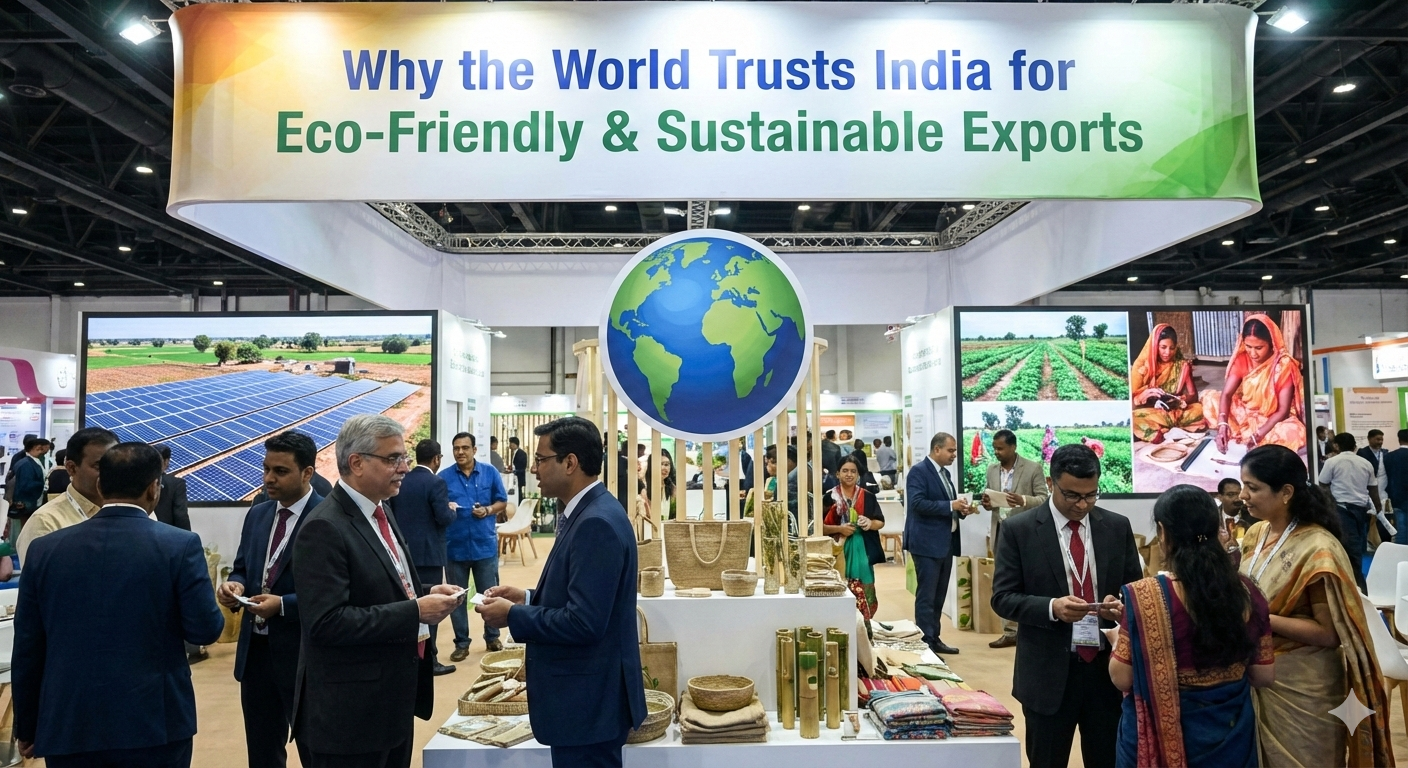
In an era where sustainability is no longer a choice but a global responsibility, India has emerged as one of the most trusted exporters of eco-friendly and sustainable products. From natural raw materials to ethical manufacturing practices, Indian exporters are redefining global trade with green values. International buyers increasingly look to India not just for affordability, but for authenticity, environmental responsibility, and long-term partnerships.
This blog explores why the world trusts India for eco-friendly and sustainable product exports and how visual storytelling—through the right image prompts—can strengthen this global trust.
India’s Deep-Rooted Culture of Sustainability
This cultural foundation gives Indian eco-friendly products a genuine story. Global buyers recognize that sustainability in India is not superficial marketing but a deeply rooted philosophy reflected in product design, materials, and production processes.
Abundance of Natural & Renewable Resources
India is blessed with an abundance of natural and renewable raw materials that form the backbone of eco-friendly exports. These resources allow manufacturers to create sustainable products without heavy dependence on synthetic or harmful materials.
Commonly exported eco-friendly materials from India include:
-
Bamboo and cane
-
Jute and coir
-
Solid wood and reclaimed wood
-
Cotton and organic fabrics
-
Coconut shell and palm leaf
-
Recycled paper and plantable seed paper
This natural availability ensures consistent quality, scalability, and eco-conscious sourcing—key reasons why international markets trust Indian suppliers.
Skilled Artisans & Ethical Manufacturing Practices
India’s eco-friendly export industry is powered by millions of skilled artisans and craftspeople. From rural clusters to modern factories, Indian manufacturers balance handcrafted excellence with ethical production.
Many exporters follow:
-
Fair wages and safe working conditions
-
Low-energy and low-waste manufacturing processes
-
Handcrafted or semi-handcrafted techniques that reduce carbon footprints
-
Community-based production models supporting livelihoods
These ethical practices resonate strongly with global buyers who prioritize social responsibility alongside environmental sustainability.
Compliance with Global Quality & Sustainability Standards
Trust in exports is built on consistency and compliance. Indian eco-friendly exporters increasingly meet international standards and certifications, which enhance credibility in global markets.
Common certifications followed by Indian exporters include:
-
ISO quality standards
-
FSC (Forest Stewardship Council) certification
-
Organic and eco-label certifications
-
Fair Trade compliance
-
REACH and RoHS standards for exports to Europe
Such compliance reassures buyers in the USA, Europe, Australia, and the Middle East that Indian eco-friendly products meet global expectations.
Cost-Effective Without Compromising Sustainability
One of India’s strongest advantages is its ability to offer cost-effective eco-friendly solutions without compromising quality or ethics. Efficient supply chains, skilled labor, and local raw material availability help Indian exporters remain competitively priced.
For international buyers, this means:
-
Sustainable products at scalable prices
-
Better margins for retailers and distributors
-
Long-term sourcing partnerships
This balance of affordability and sustainability makes India a preferred sourcing destination worldwide.
Wide Range of Eco-Friendly Export Products
India’s export portfolio is incredibly diverse, catering to multiple global industries and markets. Eco-friendly products exported from India include:
-
Handicrafts and home décor
-
Jute and cotton bags
-
Bamboo lifestyle products
-
Sustainable packaging solutions
-
Wooden kitchenware and furniture
-
Plantable stationery and eco-gifts
-
Organic personal care accessories
This versatility allows buyers to source multiple product categories from a single trusted country.
The Power of Visual Storytelling in Building Global Trust
In today’s digital-first world, visuals play a crucial role in shaping buyer perception. For eco-friendly exporters, images must communicate trust, authenticity, sustainability, and global reach.
High-quality visuals help:
-
Build brand credibility
-
Showcase eco materials and craftsmanship
-
Highlight export readiness
-
Appeal to conscious global buyers
This is where a well-crafted image prompt becomes essential.
Conclusion: India as a Global Leader in Sustainable Exports
India’s growing reputation as a trusted exporter of eco-friendly and sustainable products is built on culture, resources, ethics, affordability, and innovation. Combined with strong visual storytelling, Indian exporters can confidently position themselves as global leaders in sustainable trade.
As the world moves toward greener choices, India stands ready—not just as a supplier, but as a responsible partner in building a sustainable future.